If you have actually simply made a first aid certificate, you are holding greater than a paper. It is proof that you appeared, learned abilities that matter when seconds matter, and fulfilled a standard set by a recognised training body. The details on that particular certificate form what you are legitimately permitted to do at the workplace, what you must keep exercising in your home, and when you require to reserve a refresher. Yet many people submit it away without reading the fine print. As someone that has actually shown and coordinated first aid training for years, I have seen jobs delay and compliance audits fail since a team did not understand what the certificate actually meant.
This overview goes through just how to read the record line by line, what the levels and codes actually indicate, the length of time each endorsement remains legitimate, and just how to prepare your next actions so you do not find yourself out of date on the day you require it.
Start with the providing supplier and accreditation
Every legit first aid certificate names the training carrier and, typically in smaller print, the approving body behind the training course. That 2nd piece issues. Service providers come and go, transform names, or run in various regions. Certification is what tells a company or regulator that your first aid course satisfied a concurred standard.
In Australia, for example, you could see a Registered Training Organisation number next to the carrier's name, along with country wide recognised unit codes like HLTAID011. In the UK, try to find Ofqual regulated credentials from granting organisations such as Qualsafe or Highfield. In the US, certificates normally cite the American Heart Association, American Red Cross, or Emergency Treatment and Safety And Security Institute, with program codes that match their catalogues. If you trained with a brand like First Aid Pro or a neighborhood college, the support structure is what maintains your qualification portable between employers.

If you can not locate an accreditation tag on your first aid certificate, speak to the service provider and request the mapping. I have actually seen well-meaning community programs provide eye-catching certifications with no standing past the event. Those can be wonderful introductions to first aid, but they do not satisfy workplace requirements for a first aid and CPR course unless they are mapped to the recognised framework.
The course title tells part of the story, the unit code tells the rest
Titles vary widely. One provider could call it First Aid and CPR, another First Aid Degree 2, an additional Offer First Aid. The unit code or qualification code is the anchor. It is the shorthand employers and auditors trust, because it brings an exact scope.
Here is a sensible method to analyze what you have:
- Course title and caption. This is the pleasant name, such as Supply First Aid consisting of CPR or Basic Life Support. It tells you the focus, yet not the governing granularity. Unit code or certification recommendation. This could be a nationwide unit like HLTAID011 or an inner code like AHA BLS Company. If your role calls for a particular system, this is the line you will certainly price estimate on forms. Special recommendations. Some certificates include explicit notes such as Consists of oxygen therapy, anaphylaxis administration, or child care first aid. These issue if you work with infants, in education, or in remote settings.
If your certificate notes multiple systems on one web page, read them all. Numerous first aid courses pack CPR training with the broader first aid part, which is handy for planning revivals since these components commonly have different validity periods.
Levels and what they cover in genuine terms
Levels can be confusing since the exact same numbers mean various things in various regions. As opposed to memorising labels, consider scope.
Basic life assistance or CPR just. This is focused on acknowledging heart attack, executing excellent quality CPR, and making use of an AED. It might likewise include choking relief and short training on healing position. It does not cover bleeding control past the fundamentals, burns, fractures, or medical emergency situations in any depth. For many duties, a stand‑alone CPR course is great as a refresher course in between complete first aid courses, yet it typically does not meet the need for a very first aider in the work environment on its own.
Provide first aid or common first aid. This is the generalist certification most employers anticipate at a minimum for assigned first aiders. It includes CPR, bleeding control and injury treatment, shock, cracks and strains, burns, asthma, anaphylaxis, seizures, diabetes mellitus, stroke acknowledgment, and basic ecological emergencies. Expect useful analyses, not just a concept quiz. In some frameworks, this is "Degree 2," "FAW," or an unit like HLTAID011.
Advanced resuscitation or advanced first aid. This builds on the typical training course with oxygen therapy, air passage accessories, bag valve mask air flow, and occasionally medicines within workplace procedures such as aspirin for believed cardiac breast pain or salbutamol for bronchial asthma. It also expands on case monitoring, triage, and interaction with emergency situation solutions. If your job sits in safety, mining, remote construction, or you supervise a group in a high‑risk environment, this is the level to consider.
Child care first aid or paediatric first aid. The core abilities resemble standard first aid, but the emphasis changes to babies and youngsters. Techniques for CPR, choking, and analysis adjust for smaller sized sizes, and the circumstances resolve child‑specific threats like febrile convulsions, croup, and intake dangers. Colleges and early learning centres typically require a devoted paediatric endorsement instead of a generic first aid certificate.
If your certification listings several lines, such as a basic first aid device plus a day care unit, keep track of each. They may share a course day, however the plans for refresher courses can diverge.
Validity, expiration, and what "suggested revival" actually means
The fine print that journeys individuals up usually is the line that reads legitimate for 3 years, revitalize CPR every year, or recommended renewal: one year. Whether that is a legal expiration or a best‑practice guideline depends upon your territory and your employer's policy.
In technique, three patterns control:
- CPR money typically runs on a 12‑month cycle. The evidence is clear that compressions and defibrillation abilities degeneration without hands‑on technique. The majority of companies ask for an annual CPR correspondence course to maintain the skill sharp, even if the more comprehensive first aid certificate is still current. General first aid usually rests on a 3‑year cycle. The procedures for hemorrhaging control, burns, and cracks do not change as rapidly, and once practised, those abilities hold longer. Numerous structures write three years right into their plan, in some cases expressed as advised instead of mandated. Employers might still set a more stringent standard. Advanced resuscitation and high‑risk endorsements tend to require a shorter renewal. If your certification includes oxygen therapy or sophisticated airway devices, expect a 12 to 24‑month need, because incorrect usage lugs risk.
When you review your first aid certificate, search for 2 aspects: an "problem day" and a "valid to" or "restore by" date. Where there is no specific expiry, treat the referral as your preparation horizon and inspect your organisation's plan. In managed sectors, the stricter regulation victories. I have had child care employees show me a three‑year first aid certificate, only to find their regulatory authority needs child care first aid currency within 24 months and CPR refreshed every year.
Skills decay is actual, and the certification does not capture it
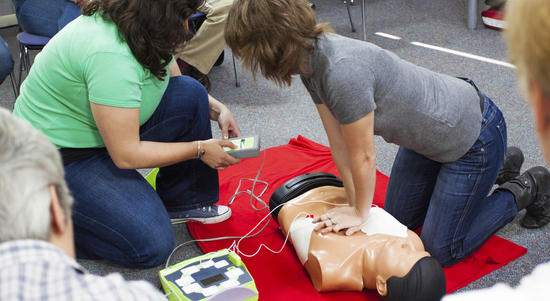
It is feasible, theoretically, to carry an existing first aid certificate for many years. That does not imply you will certainly execute confidently under stress. I once enjoyed a staff member with a two‑year‑old card hesitate in front of an actual AED since the electrode pads looked different from the training system. We shed forty seconds getting rid of that obstacle. After that incident we relocated to six‑month technique drills, brief and focused, supported by micro‑learning modules.
Consider the certificate a flooring, not a ceiling. Brief session matter, whether through your service provider's CPR training refreshers, internal situations with manikins, or community drills. If your workplace runs a security meeting on a monthly basis, include a four‑minute ability terminal. Turn topics: epinephrine auto‑injector procedure, recuperation position for a big subconscious person, tourniquet placement with actual devices, baby CPR compressions. Those small reps maintain your first aid and CPR skills ready genuine life rather than simply the exam room.
Matching the certificate to your role and threat profile
The right training level relies on more than work title. Ask 3 concerns. Who are you in charge of, what are the likely emergency situations, and just how far are you from definitive care?
Take a little store in a city. Likely problems are collapsing, small lacerations, and periodic cardiac events among customers. An AED is usually offered nearby. Offer First Aid plus yearly CPR training covers the demand for marked initial aiders.
Shift the scene to a remote stockroom or a building website with mobile plant and heat exposure. Trauma danger increases, and rescue response times stretch. Right here, a first aid and CPR course may not suffice. Advanced resuscitation or advanced first aid comes to be much more sensible, with additional gear on website like oxygen, bag shutoff masks, and hemorrhaging control kits. Refresher courses must be extra regular, and drills need to include realistic extrication scenarios.
In childcare and education and learning, paediatric recommendation is non‑negotiable due to the fact that technique and decision‑making differ for little bodies. Add bronchial asthma and anaphylaxis components, and make sure the personnel in fact practise with the exact model of spacer and auto‑injector the center stocks.
Your first aid certificate should show this judgment. If it does not, your following step is either an upgrade training course or targeted brief components that load the void, such as anaphylaxis administration, oxygen therapy, or remote location first aid.
Recognising combined, online, and face‑to‑face components
Modern first aid courses often divide theory and technique. Your certification could point out combined delivery with on-line pre‑learning. That is normal, and normally an indication the service provider is utilizing class time for the hands‑on job that matters. What issues to auditors and insurance companies is the abilities evaluation. Somewhere on the certificate, you need to see confirmation that you showed practical skills to competency.
If your function calls for proof of physical CPR efficiency on a manikin for 2 mins without interruption, make certain the program you scheduled consisted of that aspect. Providers like First Aid Pro, nationwide charities, and larger training companies typically define these evaluation requirements in their summaries. If you only finished an online module without a practical check, do not presume it meets a workplace first aid requirement.
How auditors and supervisors review your certificate
When I examine a team's training matrix, I scan for 5 items prior to I authorize off:
- Provider name and accreditation referral that maps to our approved frameworks. Clear system codes or credentials titles that match the function requirement. Issue and expiration or recommended renewal days, flagged in our calendar. Evidence of functional assessment for CPR and any type of advanced abilities claimed. Alignment in between the certificate scope and the threats on the ground.
You do not require a matrix to manage your very own piece of this. Put the days in your calendar with a barrier, conserve a PDF copy in your HR data, and maintain a picture on your phone. If a client or website supervisor requests for evidence throughout an induction, you will certainly have it in seconds.
Edge situations that trigger confusion
Two scenarios create more email than any others.
Multiple companies, overlapping days. You could complete a stand‑alone CPR course in March and afterwards a full first aid course in June that includes CPR. Which CPR expiration uses? Most employers reset the CPR clock to one of the most current evaluation. Record both, and if your June training course plainly included a complete CPR sensible, you can plan your next CPR correspondence course for the following June. If the June element was theory‑only, keep the March cycle.
Name changes, lost certifications, and reissued documents. If your lawful name transformed after the training course, ask the service provider for an editioned certification that matches your existing ID. Several HR systems reject dissimilar names. If you lost a certificate, reliable companies hold records and can resend a duplicate. If the service provider folded up, call the accrediting body. They can often validate your system conclusion versus the nationwide or organisational register.
The small print on practical changes and evaluation conditions
Good companies clear up modifications for learners with injuries or specials needs without watering down the requirement. Your certification will not detail these modifications, yet your duty might. For CPR, many frameworks require you to demonstrate compressions at a defined deepness and price on a company surface. If you can not safely do that because of a clinical problem, you can still learn and aid, however you should not be designated as the single designated initial aider. This is not regarding omitting any person, it is about matching capacity to duty in First Aid Certificate Maroochydore an emergency where reluctance or inadequate compressions cost lives.
If you manage a group, build redundancy right into your protection strategy. Go for at the very least 2 people per change with current first aid and CPR training, ideally much more in high‑traffic or high‑risk websites. Individuals take leave, change functions, and sometimes freeze under anxiety. Redundancy is cheap insurance.
Planning your following steps from what the certificate shows
Your certification provides you 3 action products if you review it carefully.
First, schedule the renewals. Include the CPR date yearly, the first aid date at three years or your regulator's demand, and any sophisticated endorsements at their shorter periods. Book refreshers 4 to eight weeks before the day to enable cancellations and illness.
Second, match your course degree to your real‑world threat. If your job changed, or your work environment added threats, upgrade beyond a basic first aid and CPR course. Ask your carrier for a space analysis. Credible business that run first aid courses, CPR courses, and advanced components will map your certification to your duty and recommend the tiniest action that shuts the gap.
Third, practise between certifications. Numerous service providers, consisting of huge brand names and regional trainers, run brief CPR training refresher courses that take ninety mins to two hours. If your company supplies micro‑sessions or situation workshops, utilize them. You will certainly retain more from 4 short sessions in a year than a single long day every three.
What great companies do, and how to pick one
Price matters, routines issue, however the high quality of your learning is what will certainly matter to the individual in front of you on the floor. When I audit courses, I search for evidence that the provider purchases trainers, tools, and assessment integrity. Teachers that can inform you why an action matters stick in your memory. Manikins that give feedback on compression depth change behavior. AED fitness instructors that match the models on your website reduce hesitation.
Large nationwide brand names and established local teams, consisting of those like First Aid Pro in Australia, often tend to maintain regular criteria and clear mapping to needed systems. Smaller sized service providers can be exceptional also, particularly if they tailor scenarios to your sector. The inform is openness. If a company notes clear course details, the certification recommendation, practical evaluation standards, and example certifications, you are most likely in great hands.
How your certification engages with tools on site
Your first aid certificate becomes part of a system. The rest includes your packages, AEDs, and any kind of extra devices your extent permits. If your certification includes advanced resuscitation, validate that your site supplies oxygen, bag shutoff masks, and the appropriate masks and accessories. If your range is common first aid, make sure your packages match modern-day assistance: plenty of nitrile gloves, shears that cut clothes, injury dressings, triangular bandages that can sling or secure splints, and at the very least one tourniquet if you work around equipment or lorries. No certification gives you skill with equipment you never ever touch. Open package, manage the equipment, and repack it. 5 mins of familiarity conserves precious time later.
When guidelines transform prior to your expiration date
Resuscitation councils update suggestions every few years, and neighborhood regulatory authorities adjust compliance information. You could hold an existing card while parts of your knowledge are already out of date. The last decade saw shifts in compression depth targets, boosted emphasis on very early defibrillation, and simplified advice for spectators and first aiders. Great suppliers update their courses promptly. Provide First Aid Course Hervey bay In between renewals, scan carrier newsletters or sign up for upgrade rundowns. If an adjustment is considerable, some organisations run free or low‑cost upgrade sessions. If not, develop the upgrade into your following CPR refresher course.
A practical timeline for remaining existing without really feeling chained to a classroom
People frequently ask how to stay compliant without constant training. The trick is to spread the lots and focus on the high‑yield pieces.
- Yearly, publication a CPR refresher course and invest at the very least ten minutes a quarter on a micro‑drill with your group or household. Every 3 years, restore your full first aid course. If your duty asks for child care first aid or sophisticated resuscitation, update those units on the very same cycle or the shorter cycle required. When your job modifications, add targeted components within 3 months. New environment, brand-new threats, brand-new training.
That cadence keeps your skills trusted and your documentation tidy. It additionally prevents stuffing three years of corrosion removal right into one lengthy day.
Reading an example certificate, end to end
Picture a certification that reviews:
Provider: Instance Training Pty Ltd, RTO 12345 Course: Provide First Aid consisting of CPR Units Achieved: HLTAID011 Offer First Aid, HLTAID009 Provide cardiopulmonary resuscitation Analysis: Theory and functional evaluation completed Issue Date: 15 March 2026 Recommended Revival: HLTAID009 after one year, HLTAID011 after 36 months
From this, you can remove your activity strategy. CPR refresher course due by 15 March HLTAID011 First Aid Course Mawson Lakes - firstaidcertificatemawsonlakes.au 2027, complete first aid course due by 15 March 2029 unless your employer or regulatory authority specifies sooner. For induction kinds, you can detail HLTAID011 as your first aid system and HLTAID009 as your CPR device. If your duty is in early childhood years, this file alone may want, and you would require the day care first aid system added. If your work environment utilizes oxygen or has a remote feedback plan, you likely require innovative resuscitation as well.
Now envision a certification from a CPR course just:
Provider: Area Health Org Training Course: Basic Life Support - Adult and Kid Assessment: Online just Problem Date: 10 June 2026

This increases flags. For office conformity, an online‑only CPR training is seldom approved due to the fact that it does not have a demonstrated useful part. It can be a handy guide, however the majority of companies will certainly still ask you to participate in a face‑to‑face or combined sensible. If your work needs a first aid and CPR course, a CPR‑only certificate will not fulfill the first aid requirement. Your next action would certainly be to book an accredited course that consists of both the concept and the hands‑on assessment.
When to rise past initial aid
There is a natural temptation to stop at the certification and depend on emergency situation services for the rest. In several settings, that is sensible. In others, you might be the only clear-cut care for fifteen to forty mins. If you run in remote locations, deal with hazardous equipment, or manage public occasions, take into consideration extra training that rests adjacent to first aid:
- Stop the Bleed programs for high‑severity blood loss control with industrial tourniquets and wound packing. Remote location first aid that resolves extended field care, improvisated splinting, and interaction plans when ambulances are not close. Event medical preparation, concentrating on design, evacuation routes, and crowd‑related risks.
These do not change your core first aid certificate. They layer on the top, and they change your devices requirements and practice session patterns.
A quick word on confidence and culture
The single most useful point your first aid certificate can give you is consent to act. Training converts fear into a list in your head: safety and security, action, respiratory tract, breathing, circulation, telephone call for aid, treat what eliminates first. When an organisation takes that seriously, the culture changes. Individuals report hazards early. AEDs stay charged and visible. Case assesses concentrate on learning rather than blame. If you remain in a position to affect that society, use your certificate as a beginning point. Share a short story from your training course at a group conference. Blog post your revival days where others can see you take it seriously. Encourage a colleague to join you in the next CPR refresher course course.
Bringing it all together
Your first aid certificate is a compact summary of your readiness to aid when it counts. Read it the method an auditor would certainly. Examine the company and accreditation, keep in mind the system codes, track the days, and match the scope to your genuine threats. Plan your renewals, keep practicing, and adjust your training when your environment changes. If your certification is silent or unclear in any kind of location, ask your supplier for clarity. Good instructors invite those inquiries, due to the fact that they signal that the discovering did greater than tick a box.
A final sensible behavior: after every refresher course, write three lines on the back of the printed certificate or in a note on your phone. One technique you boosted, one tool you need to examine website, and one scenario you plan to rehearse. 6 months from currently, those notes will push you back right into action, and your following renewal will feel like a tune‑up rather than a rescue mission.